
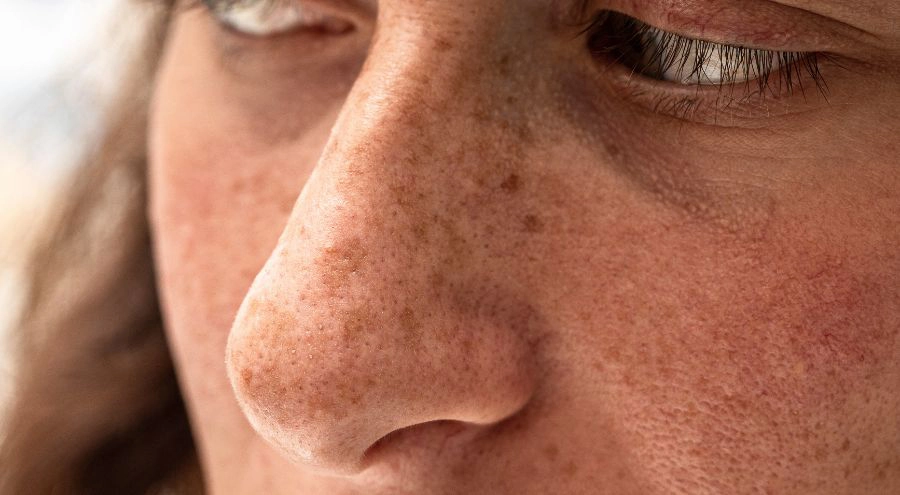
If you want a brighter, more even tone heading into spring, the key window starts in late winter. UV intensity picks up before most routines adjust, and skin that felt calm in July can look patchy by October. By the time you spot new marks, the trigger was often weeks earlier.
We see it every year. Clients with solid routines feel like their skin went backwards. The issue isn’t your products. It’s timing. Set your brightening layers and SPF habits now and you’ll hold your progress rather than chasing spots all summer.
Why Late Winter Is the Highest-Risk Window for Pigmentation
Across much of Australia, UV intensity starts rising from August. Melanocytes, the cells that make pigment, respond with a lag. The darkening you notice in October often reflects exposure from earlier weeks. Act a little earlier and you help your skin keep tone steadier.
This is the window most routines miss. Winter SPF habits tend to be lighter: one application in the morning, fewer reapplications, and skipped days on overcast mornings. Those habits don’t automatically reset when the weather shifts. UV can still be meaningful on a grey August day in Sydney or Brisbane, even when it doesn’t feel like it.
Melasma is particularly sensitive to this window. If you have known melasma, a home routine alone may not hold it through a UV spike. That’s a conversation worth having with a clinician before spring, not after the flare.
What Your Skin Is Actually Carrying Into Spring
Winter barrier changes can linger longer than expected. Heating, low humidity, and heavier layers can all shift how your skin behaves. A stressed barrier makes actives less tolerable and more likely to cause the low-grade irritation that gets mistaken for sensitivity.
A common pattern we see is a client using retinol two to three nights a week through winter, with a vitamin C serum most mornings, who feels like their routine is dialled in. Come late August or September, cheekbones and the upper lip look darker than they did in June. The retinol hasn’t changed. The vitamin C hasn’t changed. UV did, quietly, while the SPF habit stayed in winter mode: applied once, not reapplied, and sometimes skipped on overcast days.
Before you add anything new for spring, ask three quick questions. Is your skin tolerating your current actives without redness or flaking? Does your barrier feel comfortable rather than tight or reactive? And is your SPF application truly consistent, or just most days? If any answer is uncertain, start there.
The Four-Week Pre-Spring Pigmentation Prep Pathway
This pathway is for clients already using at least one active, retinol, vitamin C, an AHA, or niacinamide, who want to move into the higher UV months without losing ground on skin tone.
Week one: barrier audit. If your skin feels tight, reactive, or flaky coming out of winter, spend the first week prioritising a ceramide-rich moisturiser morning and night. Hold your actives at their current frequency. Don’t add anything new yet.
Week two: SPF habit reset. Move to a broad-spectrum SPF 50 every morning, full stop. If you’re outdoors between 10am and 3pm, plan for reapplication. This is the foundation. Everything else in this protocol depends on it actually happening.
Week three: vitamin C in the morning. If you’re using a stable vitamin C serum, morning application under SPF is where it earns its place. It supports your antioxidant defence during daylight. If you’ve been applying it at night, shift it to mornings now.
Week four: assess your retinol or AHA frequency. If your barrier feels settled and your SPF habit is consistent, maintain or gently increase your retinol or AHA frequency. If your skin is still reactive, hold your current frequency and revisit in two weeks. Adding a stronger active onto a stressed barrier as UV rises is the most common way clients undo months of progress.
Which Brightening Actives to Layer, Which to Pause, and in What Order
Niacinamide is the workhorse of a pre-spring brightening routine. It helps skin look calmer and more even, supports the barrier, and works on the transfer of pigment to the skin’s surface. It pairs well with both vitamin C and retinol. Many clients tolerate it well even when other actives need to be stepped back. Use it morning and night if your skin is comfortable with it.
Vitamin C belongs in your morning routine, layered under SPF. If your skin is settled, consider whether your current formula is giving you the brightness you want. A well-formulated L-ascorbic acid serum at 10 to 15 percent is a reasonable target for many established users. Its value here is clearer, brighter tone over time, as a complement to sunscreen, not a replacement.
AHAs, like glycolic and lactic acid, can increase photosensitivity. That doesn’t mean stopping them. It means being rigorous about SPF. If you’ve been using an AHA two to three nights a week, you can continue into spring provided your SPF is consistent and broad-spectrum. If your SPF habit is patchy, step the AHA back to once a week until you’ve fixed that first.
Tranexamic acid and azelaic acid are worth considering for post-inflammatory pigmentation or melasma-prone skin. Both are often well tolerated and can be used morning or evening depending on the formulation. They don’t carry the same photosensitivity concern as AHAs, which makes them useful additions in the lead-up to higher UV months.
What to pause: strong exfoliating acids used more than three times a week, and any new active you haven’t trialled before. Spring isn’t the time to introduce something your skin hasn’t met yet.
- Morning: vitamin C serum, niacinamide (if separate), SPF 50
- Evening: cleanser, niacinamide or tranexamic acid, retinol (two to three nights) or AHA (one to two nights), moisturiser
- Don’t layer AHA and retinol on the same night if your skin is reactive
- Azelaic acid can go morning or evening; check your formulation’s guidance
SPF Habits That Actually Hold When UV Climbs Fast
The most common SPF mistake isn’t choosing the wrong product. It’s applying the right product once and assuming that’s enough. SPF can degrade with UV exposure, sweat, and touch. Reapplication isn’t optional if you’re spending meaningful time outdoors.
If you wear makeup, a tinted SPF or SPF-containing powder for midday top-ups is practical and removes the barrier of having to reapply over a full face. The best SPF is the one you’ll actually use consistently.
If you’re using retinol or an AHA, your skin may be more reactive to UV than it was before you started those actives. This doesn’t mean those actives are causing pigmentation. It means SPF is doing more work, and the habit needs to match that.
One firm position from us: if you’re not reapplying SPF on days you’re outdoors for more than an hour, no brightening active in your routine will fully compensate for that gap. Fix the SPF habit before you optimise anything else.
When a Professional Review Before Spring Makes a Real Difference
If your pigmentation has worsened in previous spring and summer seasons despite a consistent routine, act before October. A professional review can check whether your current active load fits your skin, whether your barrier is genuinely ready for a UV-heavy season, and whether a treatment like a brightening peel or LED could help you get ahead.
Clients with known melasma especially benefit from a pre-spring check-in. Melasma responds to UV, heat, and hormonal shifts in ways a home routine alone can’t fully address. We’d typically suggest a professional review in August or early September so there’s time to adjust the plan before UV intensity peaks.
If you’ve had no visible improvement in tone after six months of consistent actives and rigorous SPF, we’d reassess the whole routine rather than just adding something stronger. Sometimes the issue is absorption, barrier function, or an underlying driver that needs a different approach.
Best options for Your Pigmentation Routine Before Spring: The Window Most Clients Miss
-

SkinCeuticals C E Ferulic
$258.00Add to cart -
Aspect DR Complete Pigment Plus Radiance Renewal
$177.00Add to cart -
SkinCeuticals Discoloration Defense
$191.00Add to cart -
Aspect Pigment Punch +
Original price was: $163.00 – $309.00Price range: $163.00 through $309.00. Price range: $163.00 through $238.14Current price is: $163.00 – $238.14Price range: $163.00 through $238.14.Select options This product has multiple variants. The options may be chosen on the product page -
ZO Skin Health Brightalive
Price range: $180.00 through $264.00Select options This product has multiple variants. The options may be chosen on the product page


Frequently asked questions
Can I keep using my retinol when UV starts picking up in spring?
In many routines, yes. Retinol and retinoids can increase your skin’s reactivity to UV, so the key is consistent SPF 50 every morning with reapplication when you’re outdoors. For most established users, continuing retinol two to three nights a week through spring is appropriate. If your barrier is reactive or your SPF habit is inconsistent, slow down to once or twice a week until both are stable. If you’re new to retinol and starting in spring, begin at a low concentration, once a week, and build slowly alongside a solid SPF routine.
My pigmentation always gets worse in October no matter what I do. What am I missing?
The most common missing piece is the timing of the SPF habit reset. Many clients who see October flares have been applying SPF once in the morning through winter and carrying that habit into a season where UV intensity is already higher. The second most common issue is vitamin C applied at night rather than in the morning, where it can support your antioxidant defence during the hours you’re actually exposed to UV. If both of those are already in place and you’re still seeing consistent October worsening, that pattern points toward a professional review. Persistent pigmentation that breaks through a well-maintained routine, especially across the cheeks, upper lip, or forehead, can indicate melasma, which often responds better to a combination of professional treatment and home care than to home care alone.

Still not sure?
Do you need more help or would like personalised advice? Complete the Online Skin Consultation. Our skin care advisor will happily help you. Choosing the right treatments and products for your skin type or concern.
Check out our latest Specials!
Browse the latest online specials and current offers from The Skin Care Clinic.







Leave a Reply