

Learn the two-question framework our clinic uses to place any active correctly, so your routine actually does what you bought it to do.
If you’ve got vitamin C, a retinoid, and an exfoliant sitting on your shelf and you’re genuinely not sure which one goes on in the morning versus at night, you’re not alone. Most clients who come to us with reactive or stalled skin aren’t using the wrong products. They’re using the right products at the wrong time, which is why skin can look a bit flat, feel prickly, or stay patchy when it should be calm and bright.
At The Skin Care Clinic, we often fix timing first. Shifting when you apply an active can calm irritation, boost glow, and make your routine feel easier without buying anything new. This article shares the simple two-question check we use in clinic so you can place products confidently, even when your routine changes.
Why Placement Matters More Than Most People Realise
When timing is off, skin can look dull, feel tighter by midday, and makeup or SPF can misbehave. You haven’t ruined anything, but you may be getting less from what you already own. Some actives wear out faster in light. Others can leave skin more touchy in daylight. A few simply perform better when skin is in a calmer state, which is usually overnight.
Take vitamin C. Clients notice a brighter, more even look and better day-to-day resilience when it goes on in the morning. It helps buffer what UV and pollution throw at your skin. Using it at night isn’t wrong, but you miss the daytime support it was designed to give.
Flip that logic for retinoids. Pop them on at night and you usually get more from the same bottle. Most formulations are more stable and feel better tolerated away from daylight, so results tend to build with fewer daytime niggles.
What Your Skin Is Actually Doing at Different Times of Day
During the day, your skin is in defence mode. It manages UV, pollution, temperature shifts, and water loss. The barrier works hard to keep things out. That context matters, because anything that nudges the barrier can feel sharper in the morning than it would at night.
Overnight, the skin tends to shift into repair mode. Cell turnover is often a little higher and the environment is quieter. This is a good window for ingredients that support renewal, like retinoids and exfoliating acids, because they work with your skin rather than against daytime stress.
We’re not saying repair only happens at night. It’s that the conditions change, and matching ingredients to those conditions is what makes an AM versus PM routine feel comfortable and effective.
The Two-Question Placement Test
Before placing any product, ask two questions. First: does this ingredient degrade, become less effective, or make you more sensitive in sunlight? If yes, it usually belongs at night. Second: does this ingredient help defend or steady the skin through the day? If yes, morning is where it earns its keep.
Here’s how that plays out with common actives.
- Vitamin C: daytime defence, morning.
- Retinol (Vitamin A): usually more stable away from light and supports overnight renewal, night.
- SPF: belongs in the morning as the last step.
- AHAs and BHAs: may increase UV sensitivity, night is preferred.
- Niacinamide (Vitamin B): flexible, often well tolerated at either time, though many clients like it in the morning for its barrier and oil-balancing help.
- Peptides (& Growth Factors): repair-focused types tend to suit evening, while lightweight hydrating peptides often work nicely in the morning too.
If a product doesn’t clearly fit, the second question usually settles it. Will this make my skin more vulnerable to what happens during the day? If there’s any doubt, evening is the lower-risk choice.
- Vitamin C: morning, under SPF
- Retinol and retinoids (Vitamin A): night, most formulations are more stable away from UV
- SPF: morning, always the last step
- AHAs and BHAs: night, may increase photosensitivity
- Niacinamide (Vitamin B): flexible, works well either time for most skin types
- Repair-focused peptides (& Growth Factors): night; lightweight hydrating peptides can go either way
Ingredients That Almost Always Belong in the Morning
Antioxidants are the clearest morning category. Vitamin C, whether L-ascorbic acid or a well-formulated derivative such as ascorbyl glucoside, helps skin look brighter and more even while adding daytime defence. Put it on first, then moisturiser followed by SPF, and you’ll usually notice a clearer glow over a few weeks.
Lightweight hydrators, including hyaluronic acid serums and water-based moisturisers, sit well in a morning routine. They don’t interfere with other actives and they prep the skin before makeup or SPF. Niacinamide is another morning favourite, especially for oiliness or post-inflammatory redness, as it helps regulate sebum and visibly calm through the day. It can often be put on at the same time as your vitamin C serum.
SPF is non-negotiable as the final morning step. It doesn’t belong at night. We still see clients using a combined moisturiser with SPF before bed because it’s convenient. Save it for the day. Its benefit only applies when there’s UV to block.
Ingredients That Almost Always Belong at Night
Retinoids (vitamin A) are the flagship evening ingredient. They support renewal and most formulations are more stable, and often better tolerated, away from light. We generally recommend PM use for all retinoids, from retinyl esters through to prescription-strength tretinoin.
AHAs like glycolic and lactic acid, and BHAs like salicylic acid, belong at night for most clients. They may increase photosensitivity. Putting them on in the morning, even with SPF, adds a variable that’s easy to avoid. If your skin is sensitive or your barrier is unsettled, start two to three nights per week and build only if your skin handles it comfortably over four to six weeks.
Heavier occlusives, including petrolatum-based balms and rich ceramide creams, make more practical sense at night. They’re not ideal under makeup or SPF, and the overnight window gives them time to support barrier repair without being disturbed.
Ingredients That Work Either Way
Niacinamide (Vitamin A), hyaluronic acid (HA), lighter ceramide serums, and most peptide serums are genuinely flexible. They don’t degrade with UV, they don’t increase photosensitivity, and they support skin comfort around the clock.
Decide based on your skin type and what else you’re using. If your morning already feels busy, move a ceramide serum to night. If evenings are doing a lot with a retinoid and an exfoliant, a calming niacinamide in the morning can balance the feel of your day.
Oily or combination skin often prefers lighter, functional layers in the morning and richer, more reparative layers at night. Dry or sensitive skin may need ceramide support both morning and night, especially in cooler months when barrier changes can linger longer than expected.
When Your Routine Is More Complex
If you’re using a retinoid at night and an AHA on alternate evenings, they don’t need to share the same night. Alternate them. Retinoid on Monday, Wednesday, Friday. AHA on Tuesday, Thursday. You get the benefit of both without stacking irritation.
Vitamin C and niacinamide is a combo that used to attract concern. The short version: at the concentrations used in most modern formulas, applying both in the morning is generally fine for most skin types. Older worries about flushing came from very high concentrations not typical in retail products.
If your routine feels like too much and your skin is reacting, adding another barrier product on top rarely fixes it. Strip back to a gentle cleanser, moisturiser, and SPF for one to two weeks. Then reintroduce one active at a time, starting with the one you need most. If you’re unsure where to start, we can map that reset with you in a consultation.
If your skin feels tight or reactive by midday, check whether an exfoliating acid has crept into your morning routine.
SPF is the last step in your morning routine, every morning. It’s not interchangeable with a night moisturiser.
Frequently asked questions
Can I use vitamin C at night if I forget it in the morning?
Yes, using it at night is better than skipping it entirely. Vitamin C still supports skin function overnight and it’s often well tolerated as an evening step. That said, it does its most useful work as a daytime antioxidant, so if you keep forgetting it in the morning, move it to the first step after cleansing to make it automatic. If you have a darker skin tone and are using vitamin C for pigmentation, consistency matters more than timing, so regular evening use is a solid approach.
I’ve been putting my AHA on in the morning. Is that a problem?
It’s not catastrophic, but it’s worth changing. AHAs may increase your skin’s sensitivity to UV, and applying them in the morning, even when you follow with SPF, adds a variable that’s easy to remove. If your skin feels tighter, more reactive, or looks red by midday, the morning AHA is a likely contributor. Move it to your evening routine, ideally on nights when you’re not also using a retinoid, and give your skin two weeks to settle. Most clients notice a real difference in daytime comfort once that shift is made.
Best Selling Products Right Now!
If you need any help in choosing your skin care, you can complete our FREE online skin consultation for personalised advice.
-

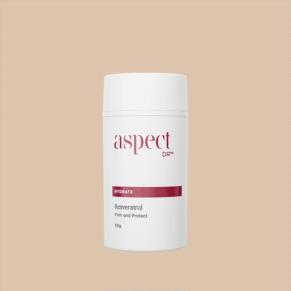
Aspect DR Resveratrol Moisturising Cream
Original price was: $104.00 – $226.00Price range: $104.00 through $226.00. Price range: $104.00 through $192.00Current price is: $104.00 – $192.00Price range: $104.00 through $192.00.Select options This product has multiple variants. The options may be chosen on the product page -
Aspect DR Multi B Plus Adaptogen Support
Original price was: $156.00 – $312.00Price range: $156.00 through $312.00. Price range: $156.00 through $265.00Current price is: $156.00 – $265.00Price range: $156.00 through $265.00.Select options This product has multiple variants. The options may be chosen on the product page -
SkinCeuticals P-TIOX
$216.00Add to cart -
Osmosis Rescue Epidermal Repair Serum
$223.00Add to cart -
Medik8 C-Tetra Advanced
$143.00Add to cart -
Skinbetter Science AlphaRet Overnight Cream
$240.00Add to cart -
Toskani Night Reverse Intensive Cream and Mask
$169.00Add to cart


Still not sure?
Do you need more help or would like personalised advice? Complete the Online Skin Consultation. Our skin care advisor will happily help you. Choosing the right treatments and products for your skin type or concern.
Check out our latest Specials!
Browse the latest online specials and current offers from The Skin Care Clinic.







Leave a Reply